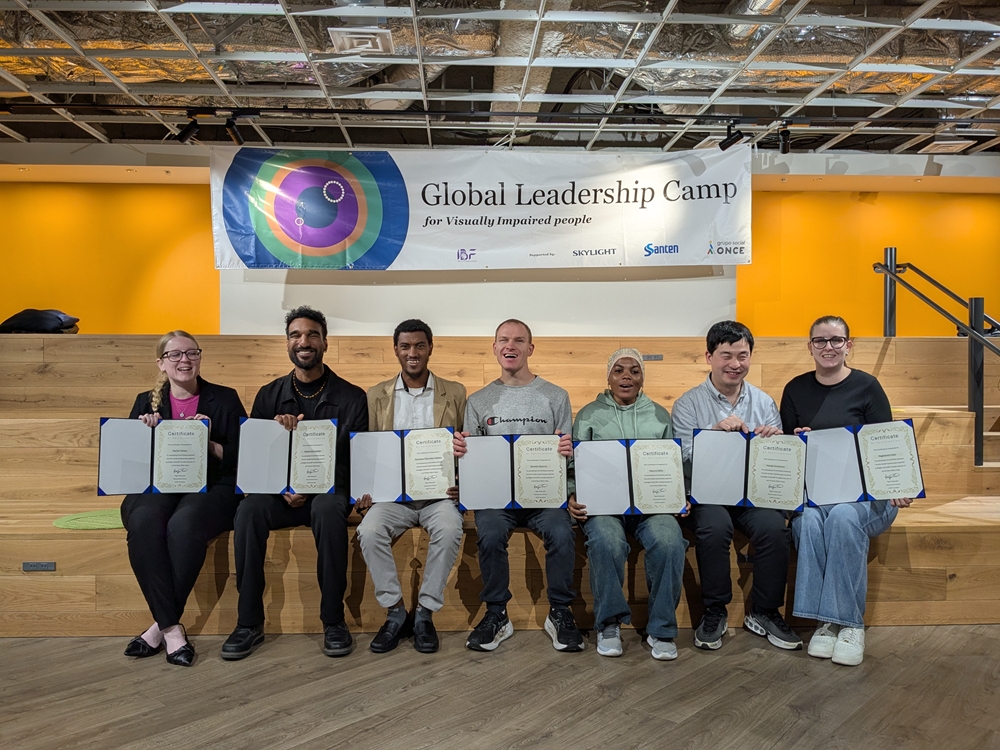
VISI-ONE Innovation Hub held the 3rd “Global Leadership Camp for Visually Impaired People” (GLC) over a seven-day period from Friday, March 13, to Thursday, March 19, 2026. The program, hosted in Tokyo and Chiba Prefecture, aims to discover and nurture the next generation of leaders among the visually impaired. It was organized under the supervision of the International Blind Football Foundation (IBF Foundation).
Seven participants from six countries took part in the program. Each brought their own social issue resolution project, titled “My Project”, which they refined through lectures, hands-on experiences, and dialogues before delivering a final presentation.
The GLC aims to identify and train leaders who are blind or partially sighted and capable of addressing the social challenges surrounding the visually impaired. Following two previous camps held in Madrid, Spain, in 2024, this third edition was the first to be held in Japan, featuring a unique curriculum supported by Japanese corporations and organizations.
Why Nurturing Leaders with Visual Impairments is Essential
Social issues related to visual impairment are widespread across the globe. While some challenges – such as education, employment, access to sports, and mobility – are universal, many others vary significantly by country and region. To solve these issues, it is indispensable to have individuals with lived experience who understand the local context and can undertake proactive leadership.
The VISI-ONE Innovation Hub implements this program with the goal of “discovering and nurturing talent to serve as future leaders who will drive the improvement and transformation of the social environment for the visually impaired in their respective countries.”
Camp Overview
Dates: March 13 – 19, 2026
Location: Tokyo (with some activities in Chiba)
Participants: 7 visually impaired individuals from 6 countries
Sponsors: Skylight Consulting Inc., Santen Pharmaceutical Co., Ltd.
Program Partners: Impact Japan, Ashirase, Inc., National Museum of Emerging Science and Innovation (Miraikan)
Participant Selection
Applicants were required to submit documents outlining their vision and the projects they wish to realize through their leadership. During the two-week application period, 24 applications were received from around the world. Following document screening and online interviews, seven individuals were selected.
Two participants recommended by ONCE Social Group – a Spain-based organization promoting the autonomy and social inclusion of people with visual impairments and other disabilities – were scheduled to attend but had to cancel at the last minute due to increased travel risks caused by the tense situation in the Middle East.
Profiles of Participants
The participants consisted of four men and three women, aged 25 to 36, representing diverse professional fields.
France (31, M): Social Entrepreneur
Ghana (31, F): Educator
Ethiopia (28, M): Legal Professional, Human Rights Advocate
Italy (25, F): Organization Manager for Visually Impaired Support
Australia (30, M): Counselor, National Blind Football Captain
Australia (31, F): Compliance Professional, National Blind Football Captain
Japan (36, M): Legal Professional, Social Entrepreneur
Venues
Upon arrival at Narita Airport, participants stayed at a hotel in Tomisato, Chiba, equipped with training facilities for the first two days. They then moved to the National Olympic Memorial Youth Center in Tokyo, where they participated in various training and experiential programs across the city.
Program Structure: Honing Leadership Through Experience and Dialogue
Participants worked through the seven-day program centered on their pre-submitted “My Project” concepts. They refined these projects through lectures, hands-on activities, discussions, and peer coaching.
Day 1: Gathering
Participants arrived at Narita Airport from across the globe, navigating to the arrival gate independently with the assistance of airline and airport staff.
Day 2: Learning Leadership Through Experience
After an orientation session and self-introductions, participants joined eight volunteers from supporting corporations for a workshop on communication and leadership.
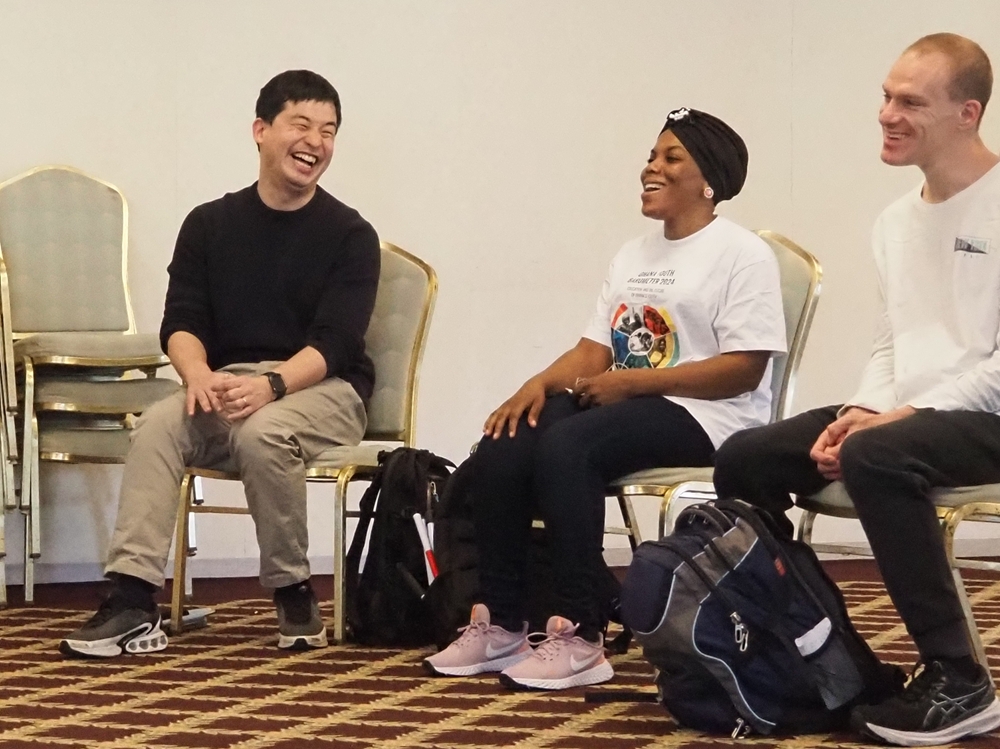
Morning: A communication workshop using blind football focused on problem-solving and team building through interaction between sighted and non-sighted individuals.
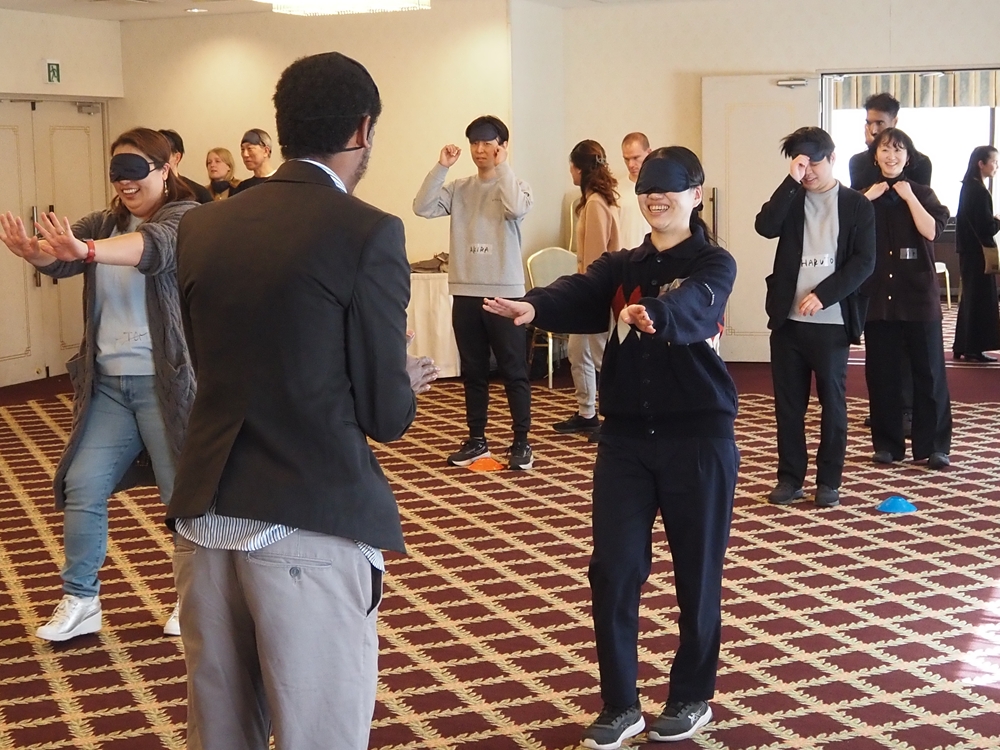
Afternoon: Leadership training led by Impact Japan. Sessions emphasized the cycle of “Awareness, Decision, and Action,” exploring the essence of leadership and mutual understanding. The day concluded with participants establishing their own “Grand Rules” (behavioral guidelines) for the camp.
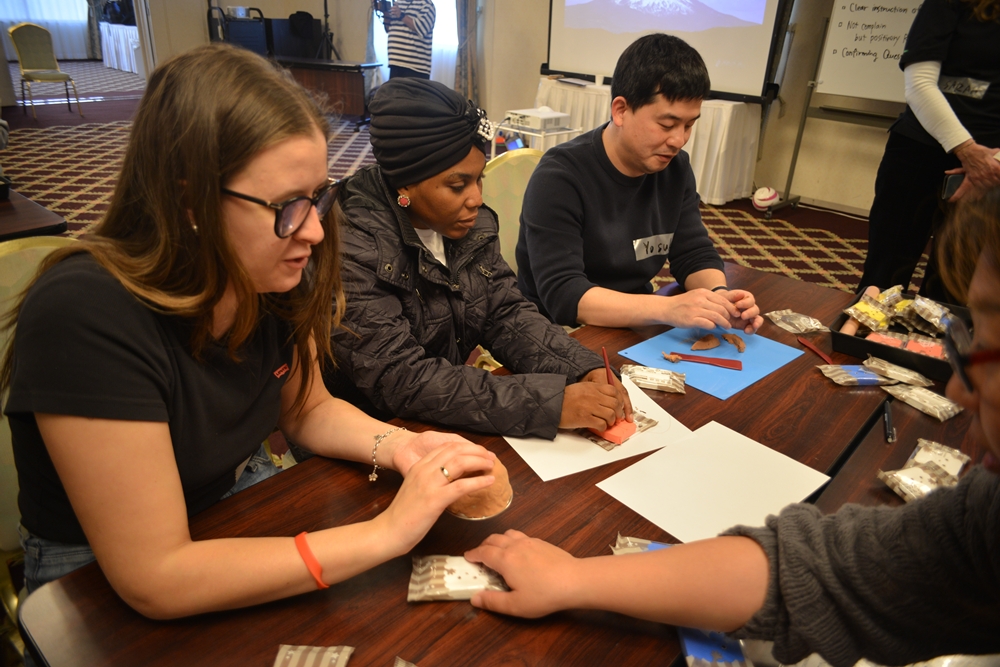
Day 3: Analyzing Social Issues from Multiple Perspectives
Participants and six corporate volunteers were divided into three groups for day-long discussions. They worked on case studies to experience the process of balancing social advocacy with business viability. In the evening, the group moved from Chiba to Tokyo.
Day 4: Business Perspectives and Technology
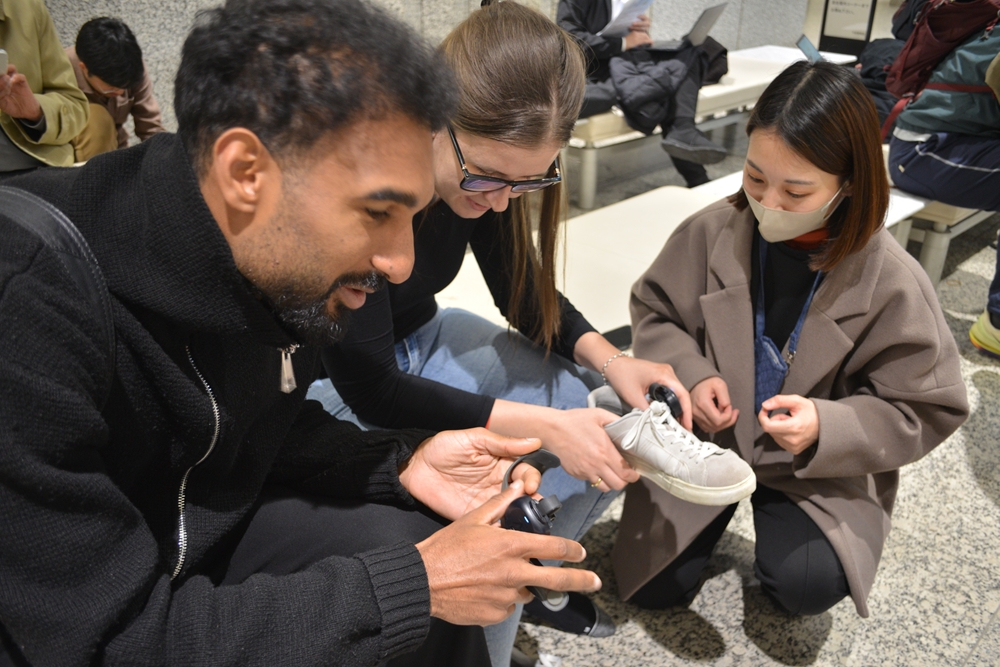
Participants refined “My Project” through peer discussions. In the evening, they visited Shinjuku to experience a presentation and demonstration by Ashirase, Inc. regarding their navigation device for the visually impaired.
Day 5: Learning Innovation
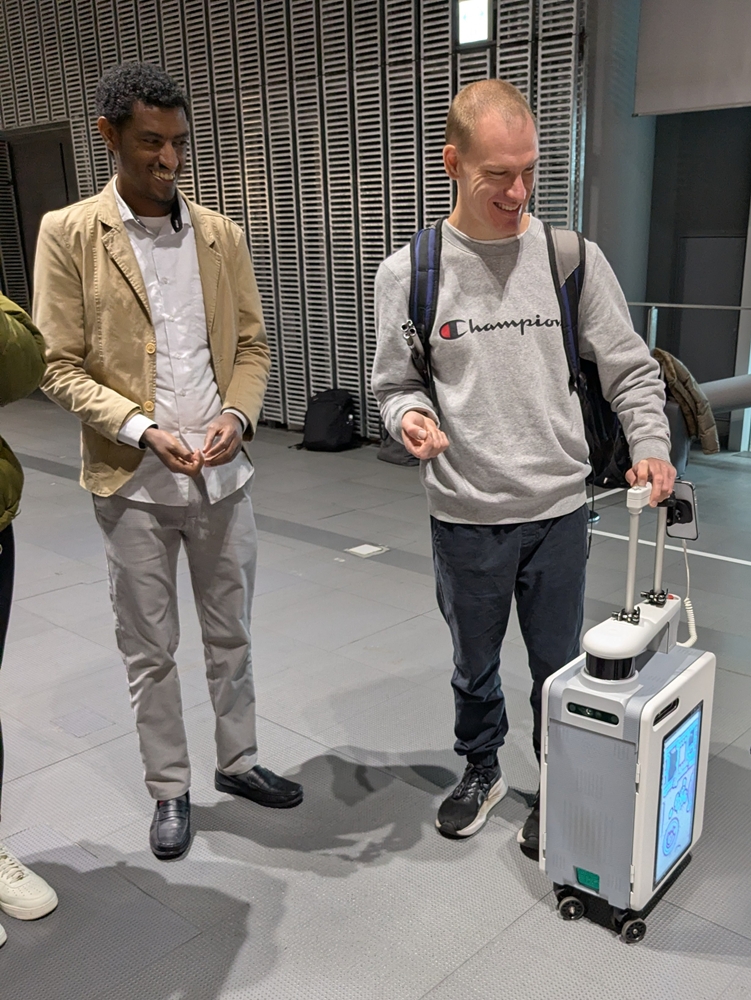
Morning: At Miraikan, participants experienced the “AI Suitcase,” a navigation robot led by Museum Chief Exective Director Chieko Asakawa. Exective Director Hironobu Takagi provided a lecture on the philosophy of innovation.
Afternoon: Joined by nine corporate participants, they formed small teams to discuss the 10-year visions for “My Project.”
Day 6: Leadership as a Stakeholder / Final Presentations
Morning: A lecture by Junichi Kawai, a Paralympic swimmer and former Chairman of the Japanese Paralympic Committee, who shared his experiences in leadership as a person with visual impairment.
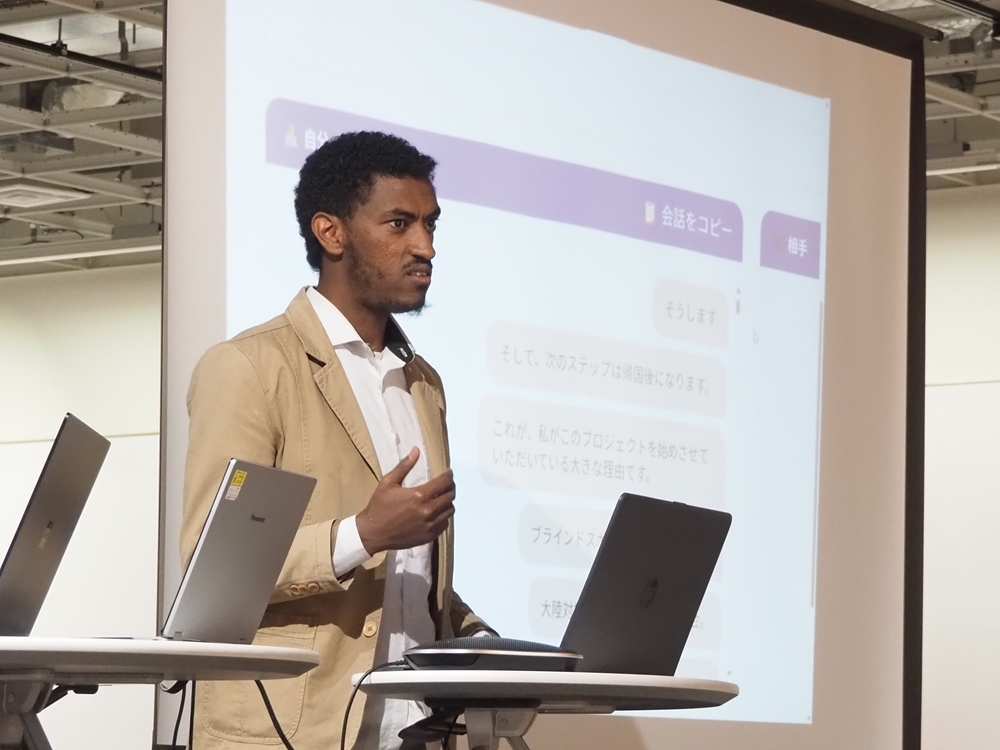
Afternoon: After final preparations at the Skylight Consulting Inc. office, the seven participants delivered their final presentations, followed by a networking reception.
Day 7: Reflection and Next Steps
Following a final reflection session in the morning, participants began their journeys home.
Participant “My Project” Presentations
Brendan Spencer (Australia)
Aims to address limited access to education, mental health, and sports resources in regional Australian communities. He plans to provide counseling services via phone and online as a private counselor.
Yosuke Kunimune (Japan)
Argues that the lack of opportunities for the visually impaired stems from systemic failures rather than individual ability. He established “With Blind,” an online school employing visually impaired instructors, aiming to expand globally over the next 10 years to eliminate loneliness among children.
Ramatu Salifu (Ghana)
Focuses on visually impaired girls in Ghana who face discrimination and lack of access to education. She launched the “Blind Camp Project,” using blind football as a tool for empowerment to ensure no one is left behind.
Dilane Dhampattiah (France)
Using “Kintsugi” (the Japanese art of repairing broken pottery with gold) as a metaphor, he operates “Osmos” in Caen—a hotel-coffee shop hybrid. It offers sensory experiences, such as tasting coffee while blindfolded, and aims to have a workforce comprising 80% visually impaired staff.
Rachel Parkes (Australia)
Addresses the gender gap in blind football, noting that women’s football is not yet in the Paralympics. She aims to lobby the International Paralympic Committee for its inclusion in the Brisbane 2032 Games.
Aschalew Chechebo Tadesse (Ethiopia)
Aims to establish Ethiopia’s first Blind Sports Association. He seeks to legally register the organization and hold national tournaments to break down barriers to sports access.
Magdalena Hofer (Italy)
In Italy’s inclusive education system, there are no specific schools for the blind, leaving children in rural areas with fewer opportunities to learn sports. She plans to hold national goalball workshops for children aged over 10 and their parents.

Voices of the Participants
“I had unconsciously believed that leadership was something you could only demonstrate if you were in a formal leadership position. However, through participating in the GLC camp, I not only had the opportunity to reflect on what my own leadership looks like, but also to explore it together with my peers, which was a very meaningful experience. Although each participant has different goals they want to achieve, we all share the same mindset: we want to challenge and change the assumptions placed on us due to visual impairments and the visible conditions in front of us. Spending a week with people who share this perspective was incredibly valuable in itself.”
“I learned that leadership is not defined by hierarchy, power or titles, but by the awareness of our actions and their impact on others. Everyone can be a leader in daily life, in teams and in society. Leadership is collective, not individual. True leadership cannot be done alone. It is created through collaboration, exchange and mutual support. Working in an international group showed me how powerful shared leadership can be.”
“It’s a dream. Don’t wake me up. But we have two possibilities. We can take this experience and trash it or we can just come back with a new suitcase full of experiences and learning and keep going, keep learning and step up. It’s not the end. It’s just the beginning of our global country.”
“I loved it and I’m going to miss it. I learned pretty much. I laughed pretty much with all of you. It’s like the objective of my project to offer the people the possibility to experience something like this. I hope that many more people can experience what we experienced.”
Looking Ahead
VISI-ONE Innovation Hub will continue to support initiatives that solve challenges for the visually impaired. We aim to see the projects born at this camp implemented worldwide, spreading new value throughout society.